
The future of education is one where everyone designs their own degree.
The scale of
the problem,
and the opportunity
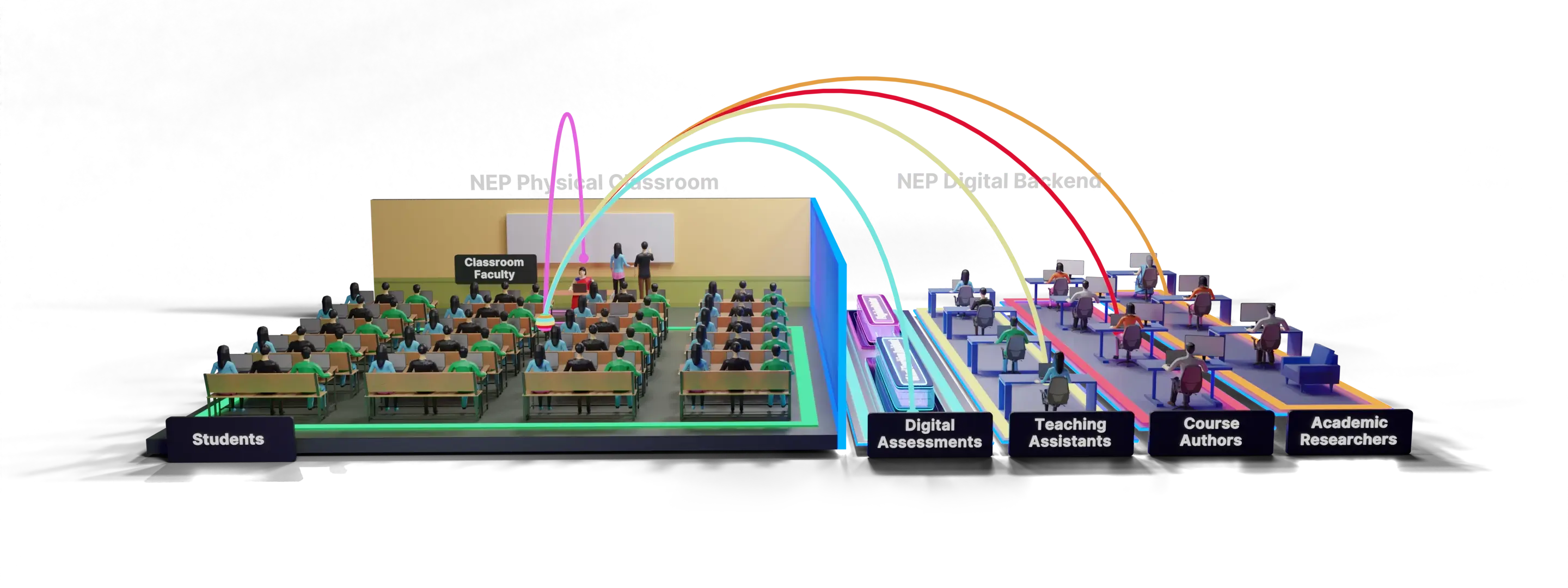
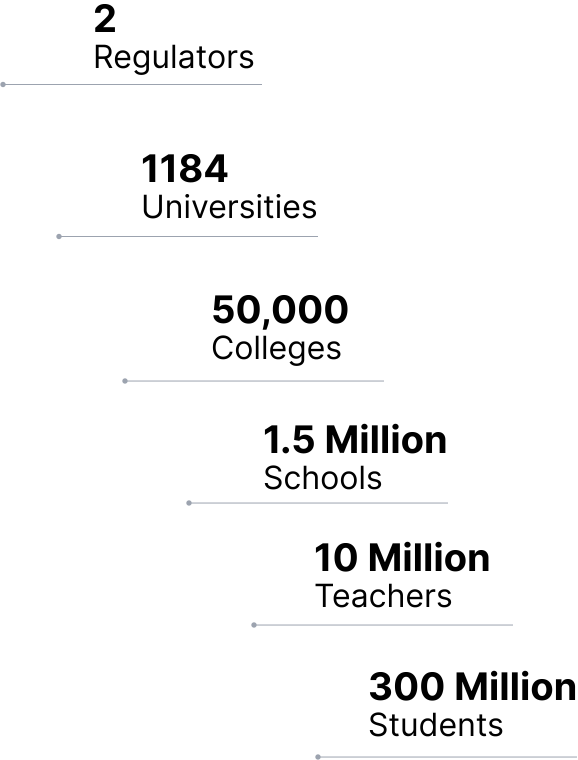
India‘s classroom education system is the largest in the world, and struggles to deliver high-quality education at an affordable cost, leaving graduates with degrees that often do not meet employability standards.

To solve this problem, we must address several deep-rooted structural challenges:
- Underfunding: The education budget allocates just 3% of GDP, half of the recommended 6%.
- Economic Barriers: Most parents can afford no more than Rs. 500 per month.
- Outdated Curricula: Curricula is misaligned with the evolving needs of industry and society.
- Skill Gaps in Faculty: Teachers lack the necessary job skills to effectively equip students.
- Flawed Pedagogy: Students are trapped in rote learning and an ineffective testing system.
Transforming Education with Digital Public Infrastructure
To address these structural challenges, India has developed the National Digital Education Architecture (NDEAR), akin to the UPI for education.
Like the UPI ID, every learner receives an Edu ID, which enables them to accumulate academic credits into an Academic Bank of Credits, accessible via DigiLocker.
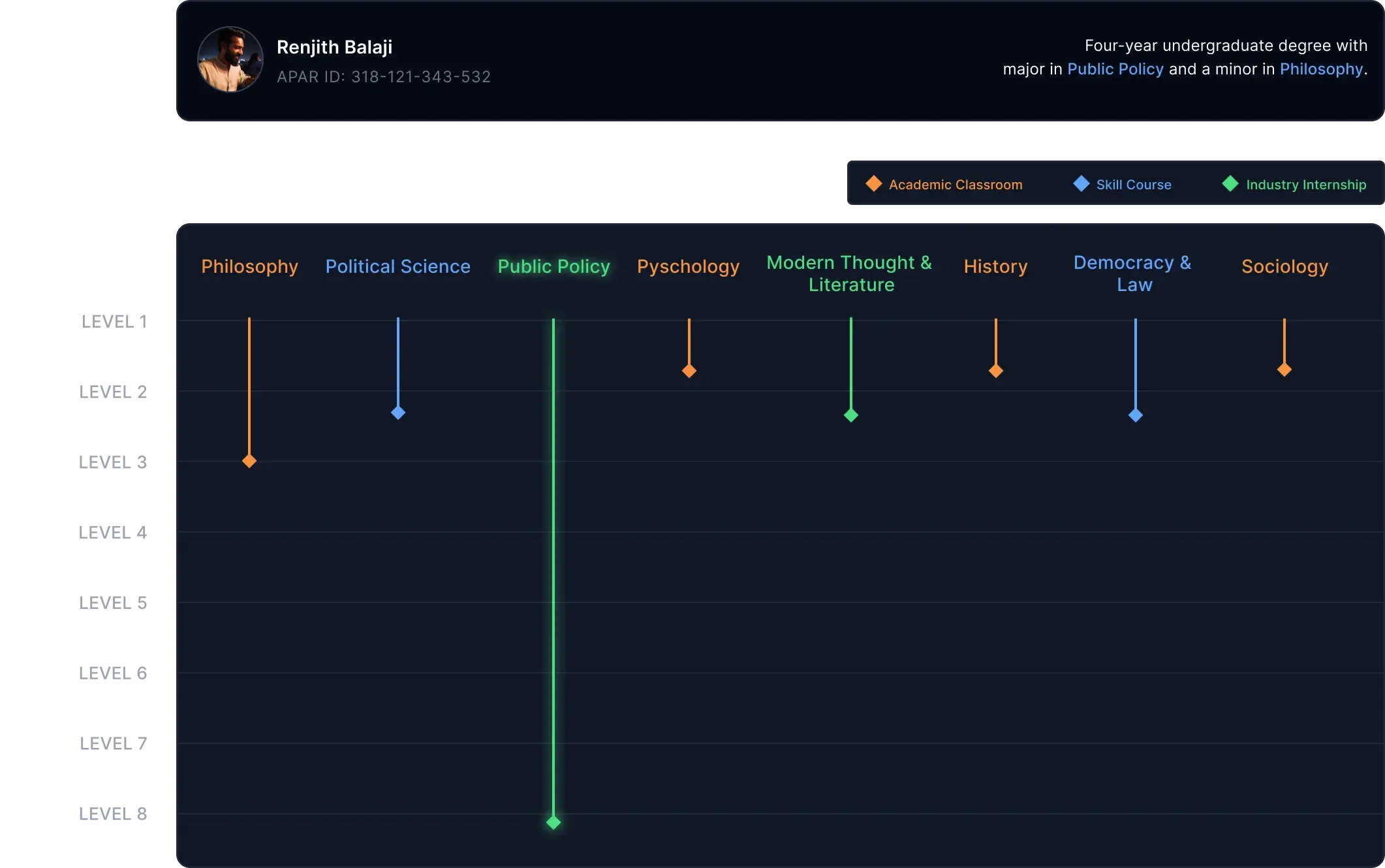
By earning 160 credits across different subjects, students can obtain a Four-Year Undergraduate Degree.
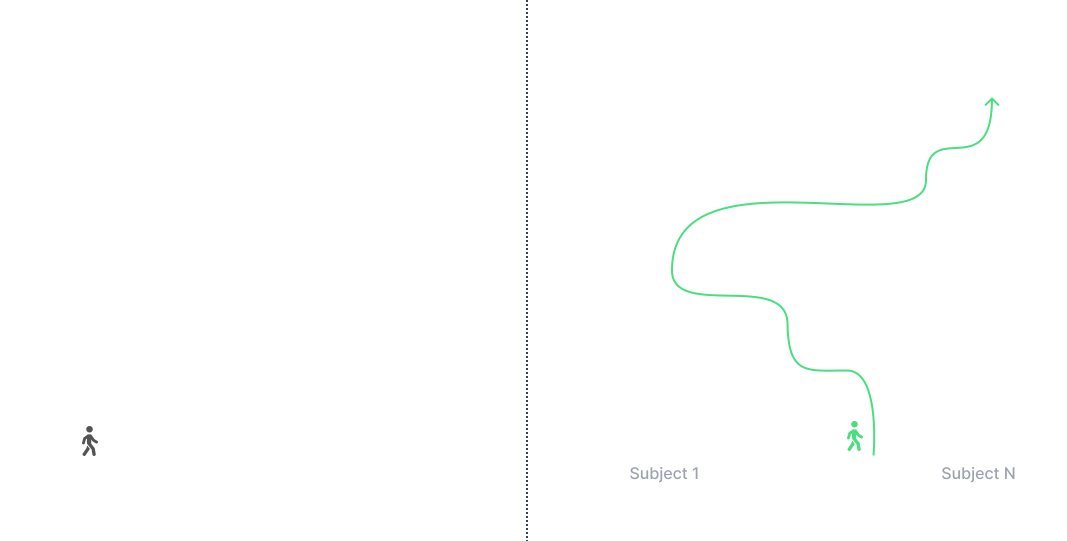
This marks a shift from the traditional age-based, linear learning path to a non-linear, interest-driven, and knowledge-based learning path.
Designing
your own degree
However, for this model to work for millions of students with varying interests, we need to create a rich curriculum bank with at least 1000 credits.
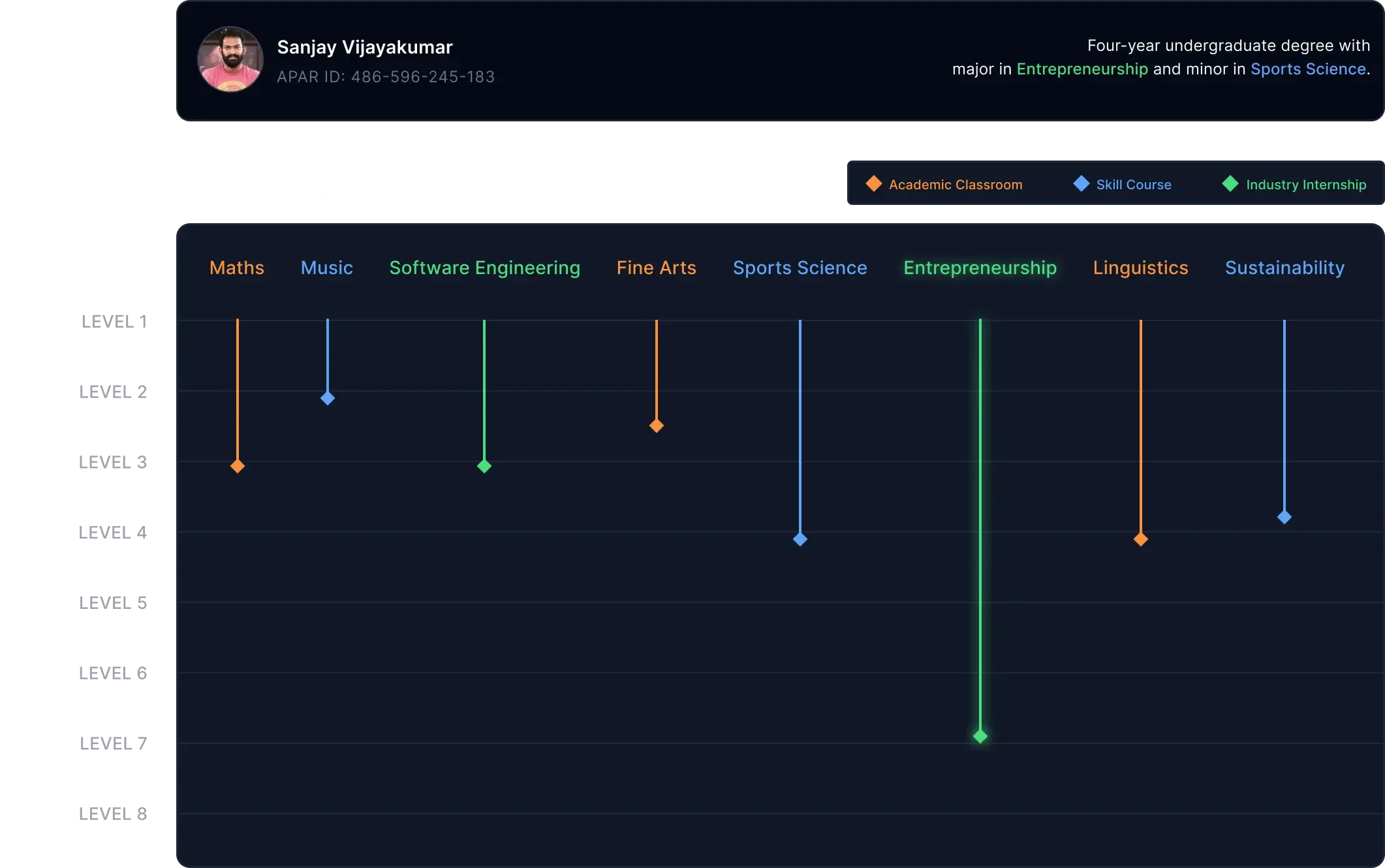
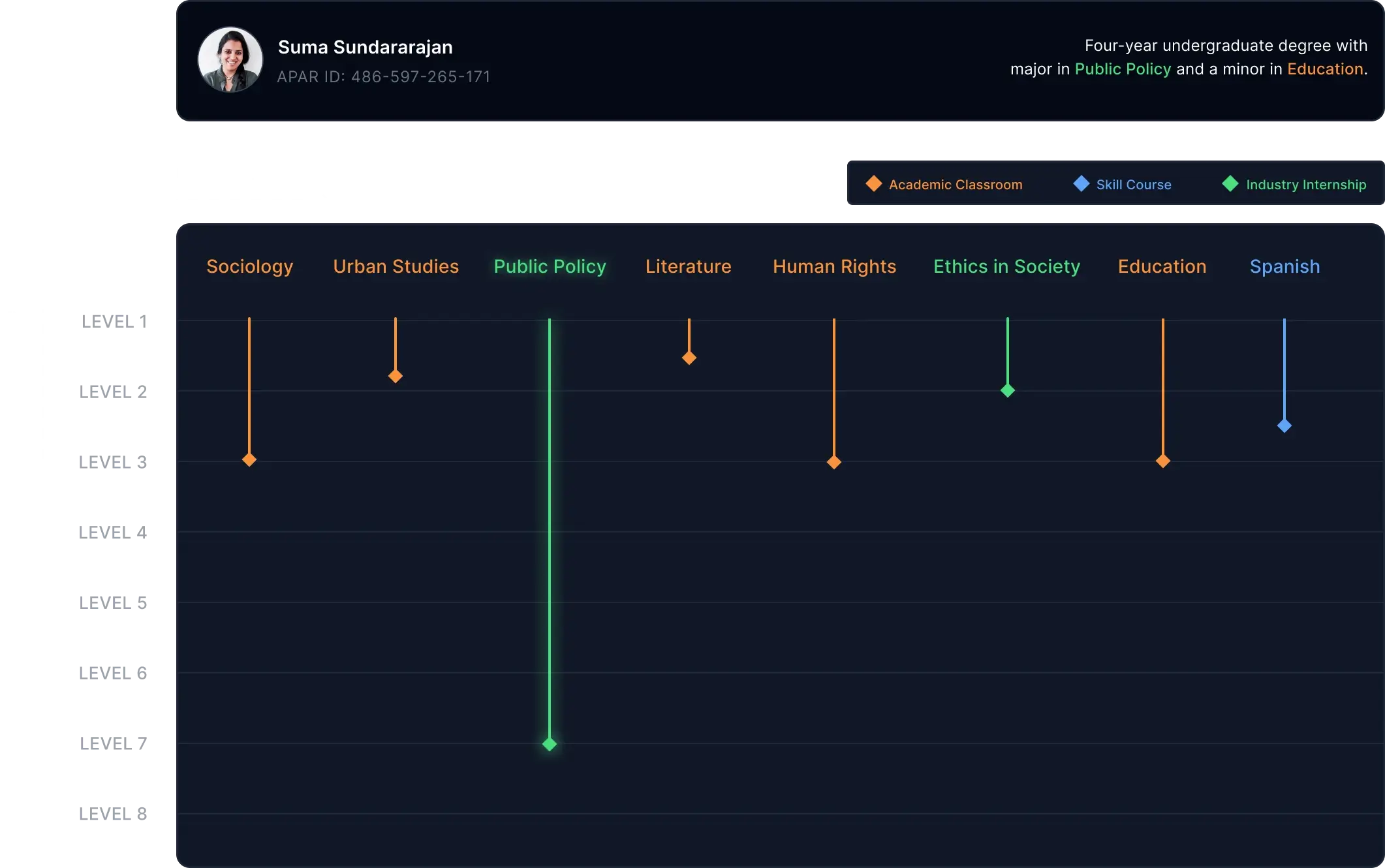
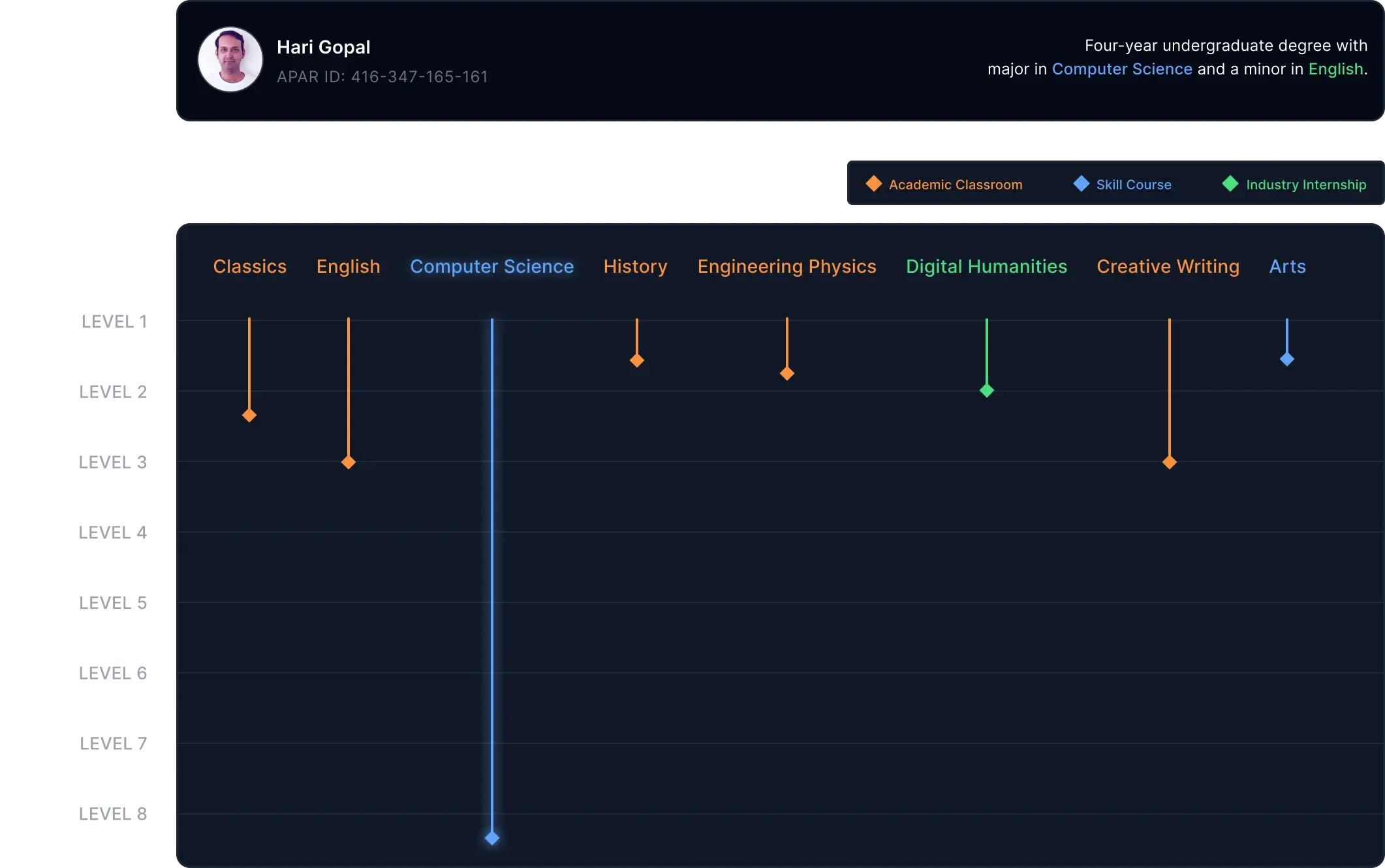
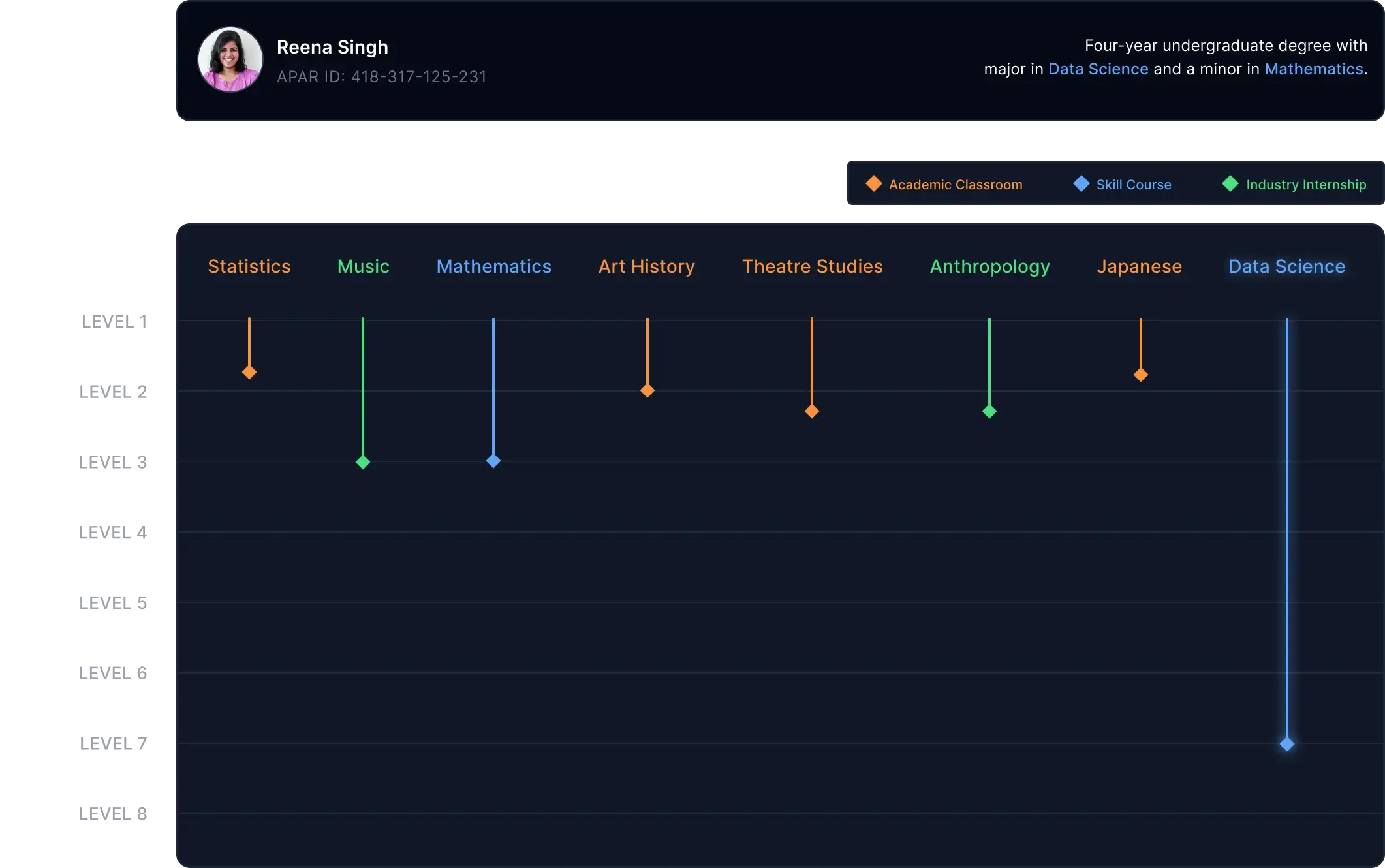
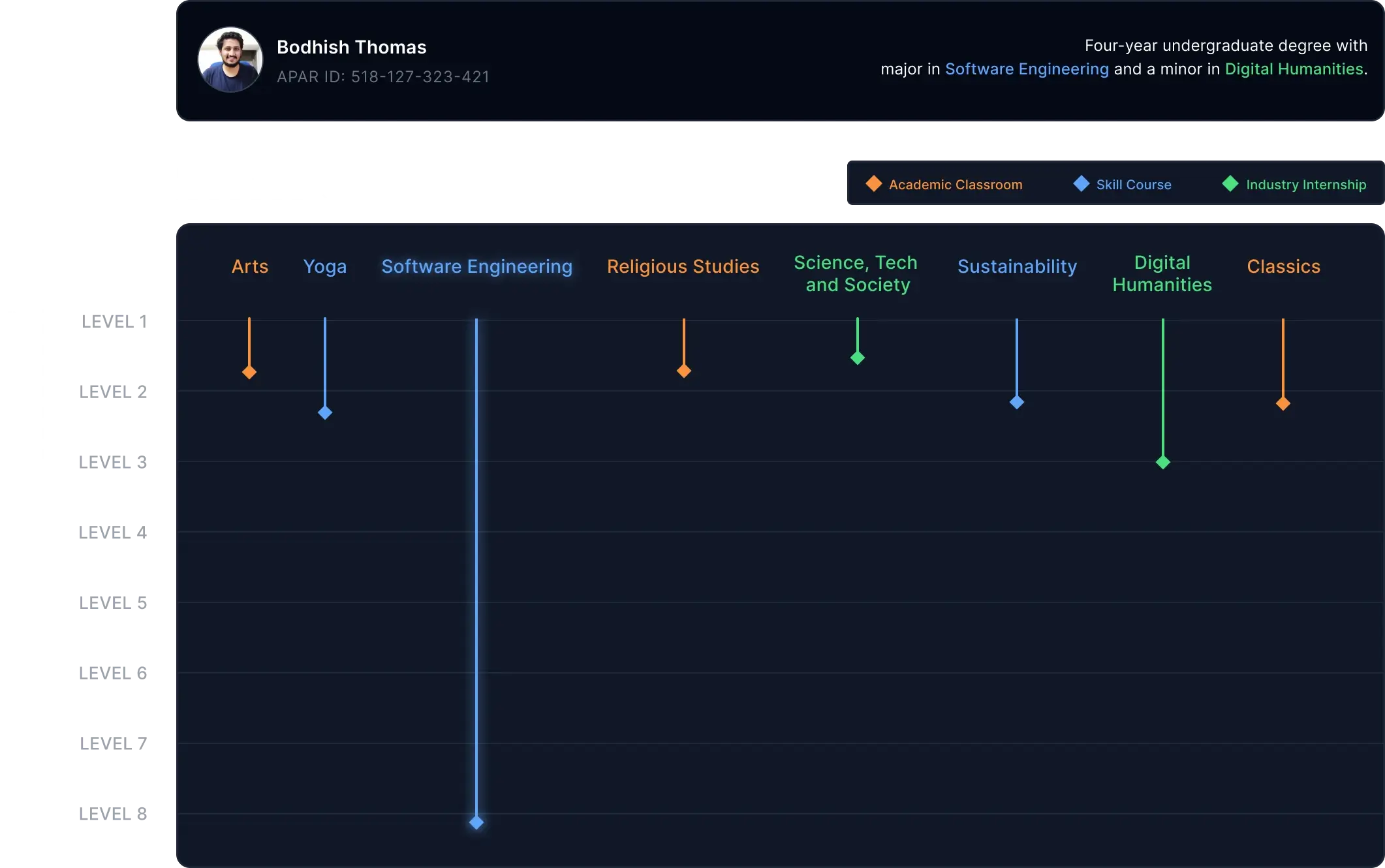
This enables students to go as deep as they want in a specific subject or to acquire a broad spectrum of knowledge across various disciplines.
It also makes it possible for students to combine traditionally unrelated fields such as fine arts with software engineering.
Here are some examples to visualize this model.
AI-powered tools
that make this possible
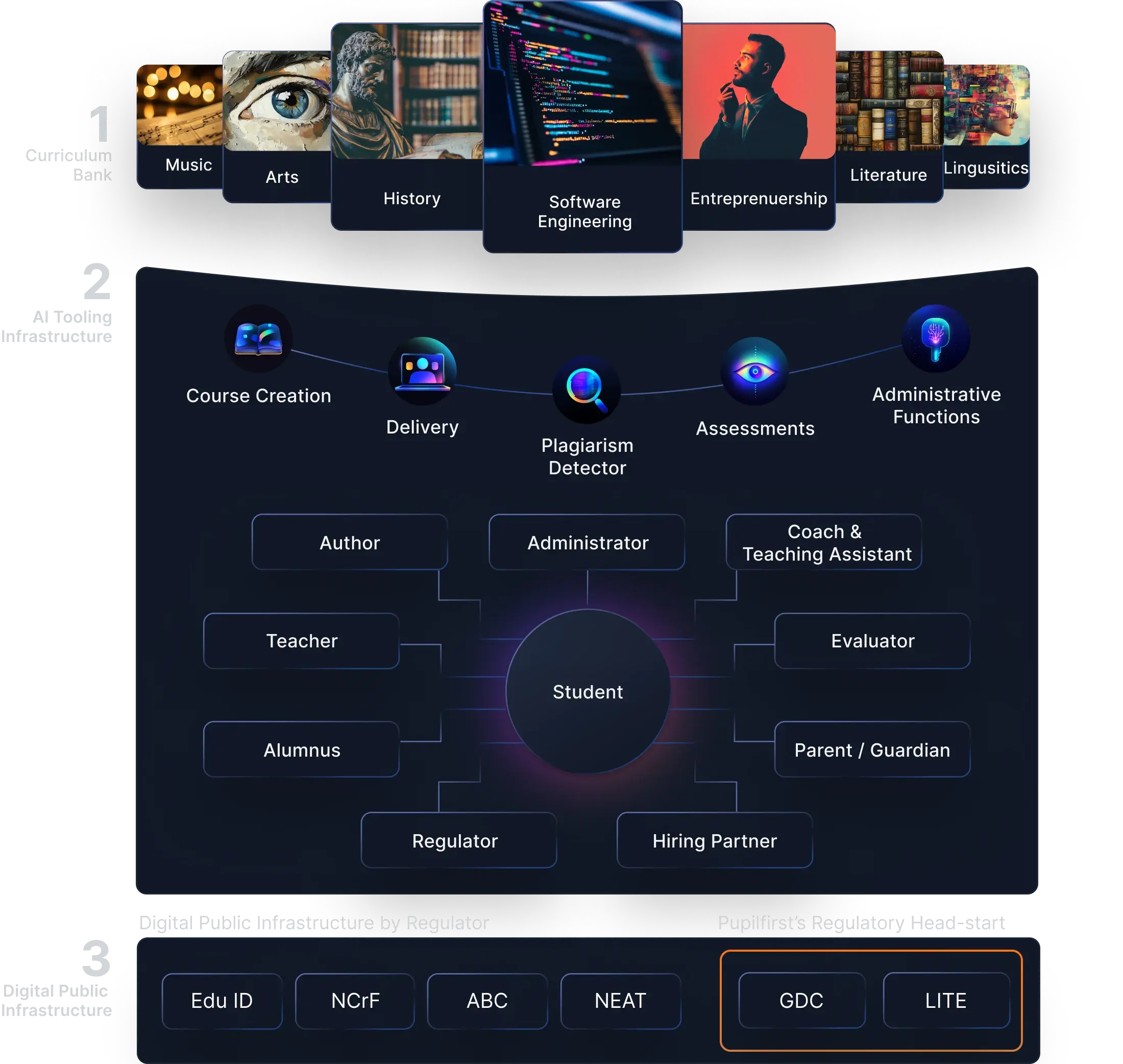
To make this vision a reality, we need more than just courses. We need AI-driven tools that:
- Help students overcome language barriers.
- Encourage honest, meaningful learning rather than shortcuts.
- Motivate consistent effort and help students cross the finish line.
- Provide support to every stakeholder involved in the education process, ensuring that students receive the guidance they need to succeed.
Visualizing the
Digital Education Architecture
Stanford Curriculum Bank
Stanford University has seven schools offering nearly 100 subjects of study.
Students are able to choose the breadth and depth of subjects to gain majors, minors, honors in their degree or even take a dual degree based on the total credits assembled.
Schools

School of Business

School of Education

School of Engineering
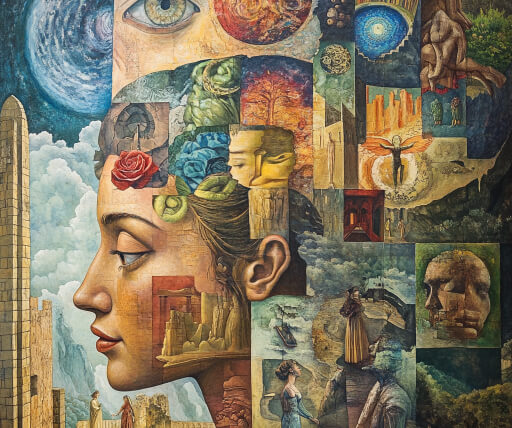
School of Humanities and Sciences

School of Law

School of Medicine

School of Sustainability
A-Z Subjects
Aeronautics and Astronautics
African and African American Studies
Anthropology
Applied Physics
Archaeology
Art History
Art Practice
Asian American Studies
Atmosphere / Energy
Bioengineering
Biology
Biomechanical Engineering
Biomedical Computation
Chemical Engineering
Chicana/o - Latina/o Studies
China Studies
Civil Engineering
Classics
Communication
Community Health and Prevention Research
Comparative Literature
Comparative Studies in Race and Ethnicity
Computer Science
Creative Writing
Dance (TAPS Minor)
Data Science
Data Science & Social Systems
Democracy, Development, and the Rule of Law
Digital Humanities
Earth and Planetary Sciences
Earth Systems
East Asian Studies
Economics
Education
Electrical Engineering
Energy Science
Engineering Physics
English
Environmental Systems Engineering
Ethics in Society
European Studies
Gender and Sexuality
Film and Media
French
Geophysics
German Studies
Global Studies
History
Arts
Human Biology
Human Rights
Iberian and Latin American Cultures
International Policy
International Relations
International Security
Iranian Studies
Islamic Studies
Italian
Japanese
Jewish Studies
Korean
Animal Science
Latin American
Linguistics
Management Science
Materials Science
Mathematical and Computational Science
Mathematics
Mechanical Engineering
Medieval Studies
Middle Eastern Language and Culture
Modern Languages
Modern Thought and Literature
Musics
Native American Studies
Philosophy
Philosophy & Religious Studies
Physics
Political Science
Portuguese
Design
Psychology
Public Policy
Religious Studies
Science, Tech and Society
Slavic Languages and Literatures
Sociology
South Asian Studies
Spanish
Statistics
Sustainability
Sustainable Architecture
Symbolic Systems
Theater and Performance Studies
Translation Studies
Urban Studies
Pupilfirst is uniquely positioned with a
five year regulatory scheme.
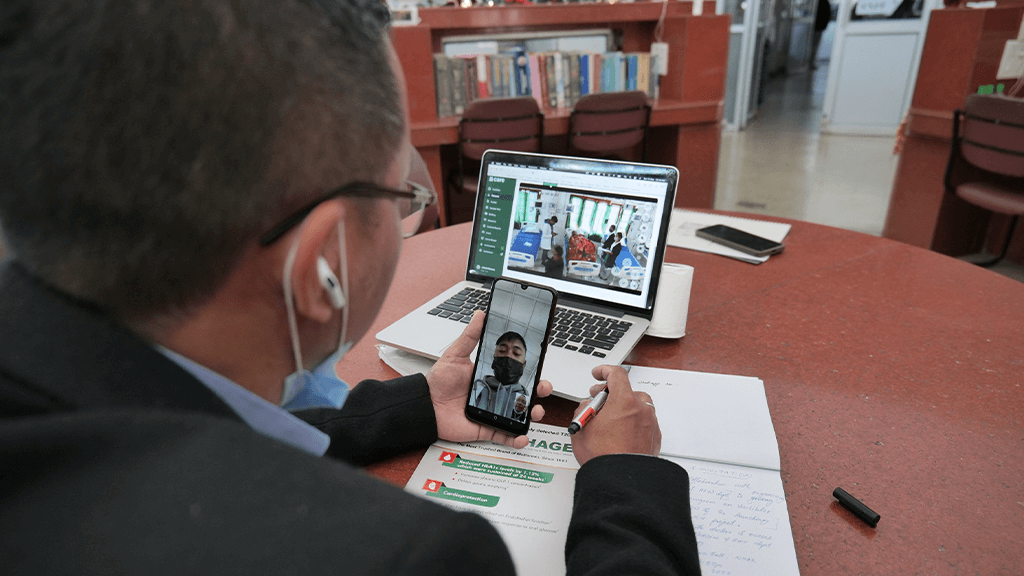
During COVID-19 national emergency, Pupilfirst and AICTE launched the Global Developer Corps (GDC) program to train students as full-stack developers to build critical software for the National Health Mission.
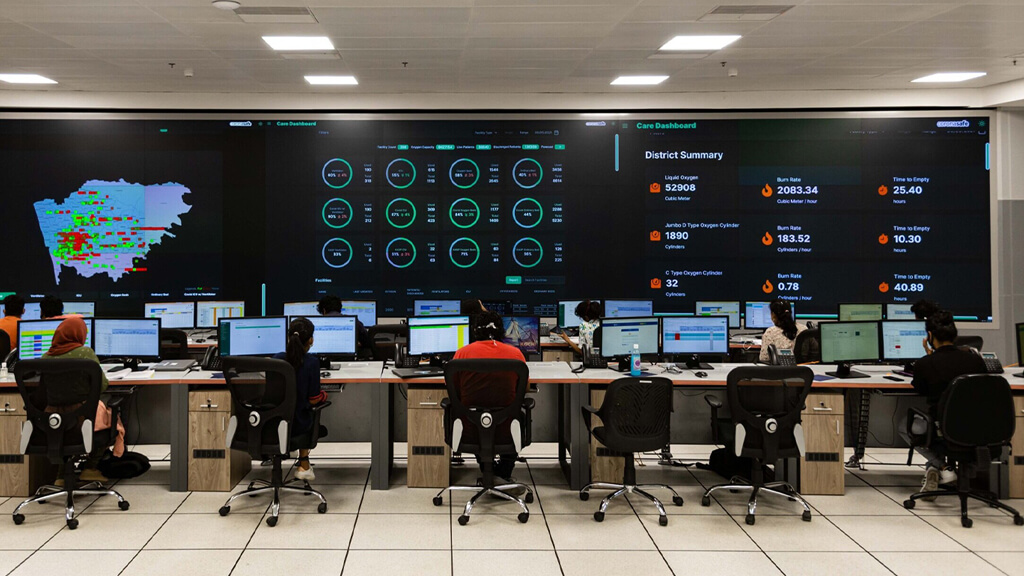
SINCE 2021
Digital War Rooms for
disaster management.
SINCE 2022
TeleICU Systems Empowering Healthcare Professionals.

SINCE MAY 2023
Ayushma AI: Empowering Nurses with Multilingual ICU Protocols.
The United Nations recognised the work that saves lives every day in rural and remote India as the 50th Digital Public Good.
Satya Nadella, Thomas Dohmke (CEO, GitHub), OpenAI, Pramod Varma (Chief Architect, India Stack) and Srikanth Nadhamuni (CTO, Aadhaar) highlighted the life-saving impact of these tools, maintained by GDC students.
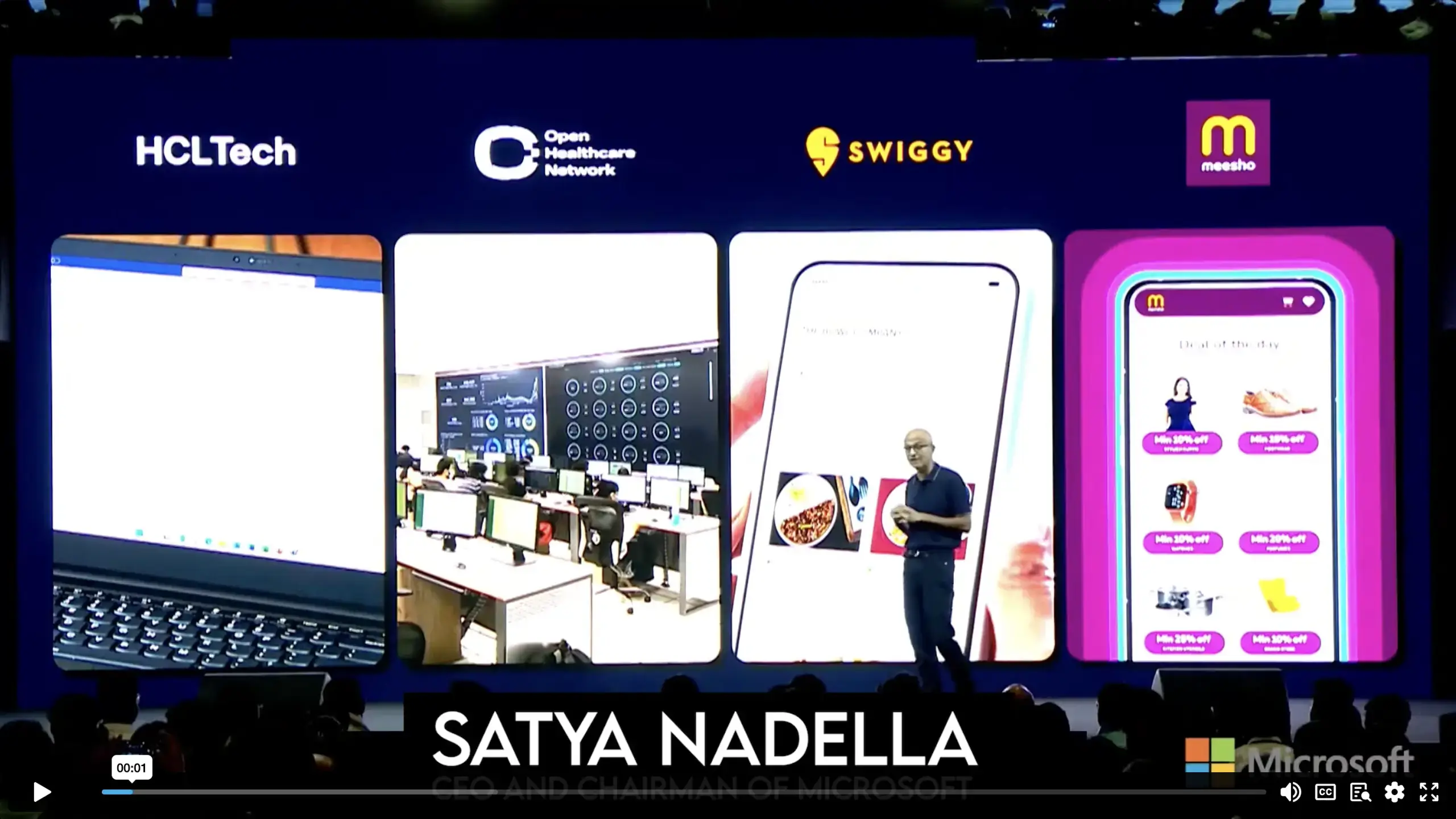
Satya Nadella‘s keynote at Microsoft AI Tour Mentioning the Open Healthcare Network, an open-source work done by our students along with industry experts.
Securing Five Year Regulatory Backing.
These powerful endorsements prompted the regulator to approve scaling the GDC into the five-year GDC AI Workforce scheme, thus turning Pupilfirst into a regulatory-approved vehicle to train a workforce of 100,000 AI Engineers andtransform India‘s teaching-learning systems using AI.
The GTM Strategy
With the rapid growth in AI investments and the proliferation of APIs that make AI accessible across sectors, there is an urgent need for a trained AI workforce.
An extraordinary techno-capital acceleration is in motion.
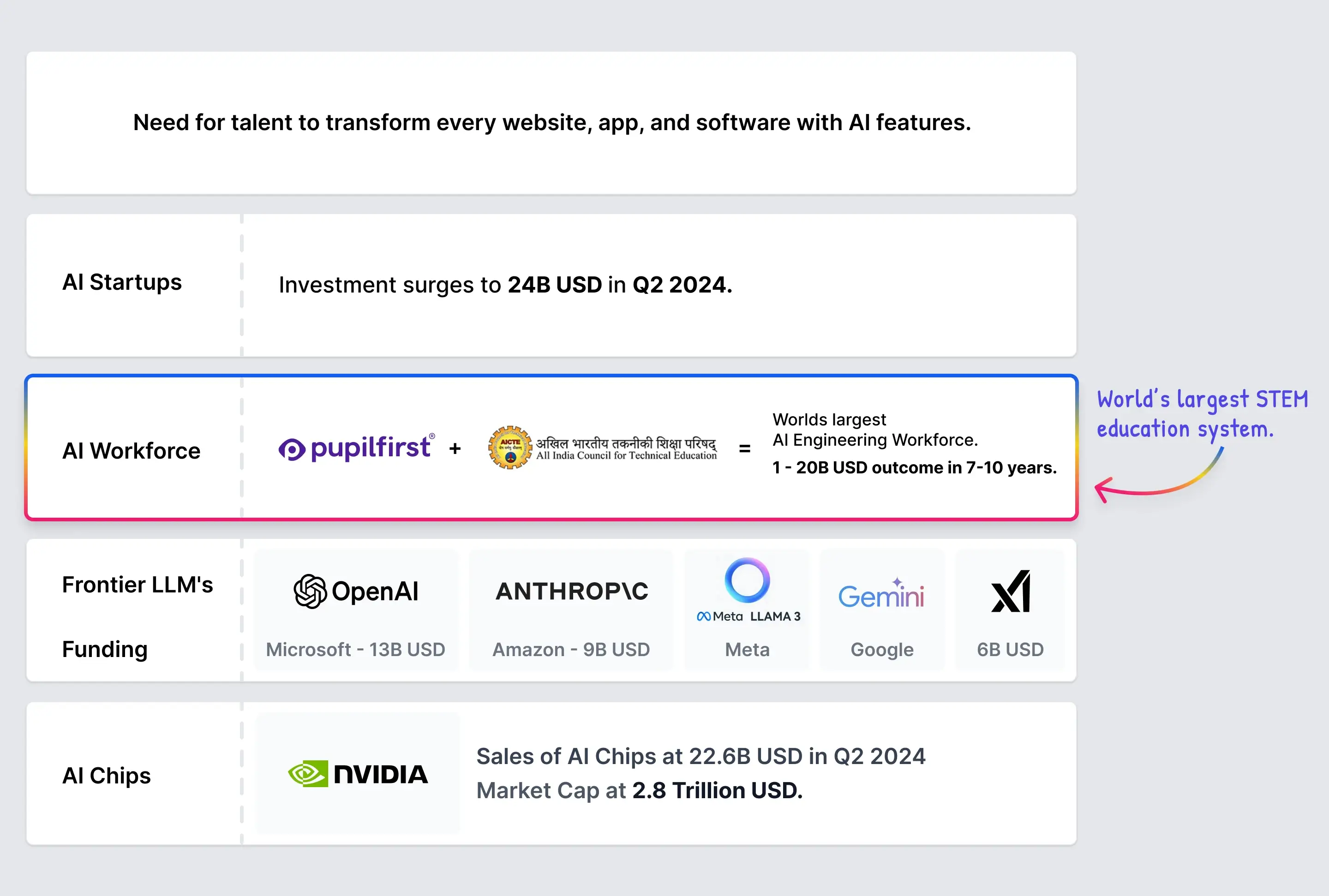
Through the GDC AI workforce scheme, we plan to capitalize on this momentum to penetrate the market and lay the groundwork for long-term value creation with the following actions:
Invest in the
Value Creation Opportunity
By keeping the price point affordable at Rs. 399 per month, we can offer our curriculum bank and tools to tens of millions of users.
If we achieve a subscription base of 1% to 20% of the market (3 million to 60 million users) over the next seven years, we project a revenue topline of Rs. 1,500 Cr to 30,000 Cr (ARR) with 25% net margins.
This translates to a PAT of Rs. 375 Cr to 7,500 Cr and an enterprise value of 1 to 20 billion USD.
| Sl | Annual Sub Fees (USD) | Market Penetration (%) | Users (in M) | Revenue (M USD) | Net Margins (25%) | Ent. Value (B USD) |
|---|---|---|---|---|---|---|
| 1 | 59.85 | 1 | 3 | 179.55 | 44.8875 | 1 |
| 2 | 59.85 | 10 | 30 | 1795.5 | 448.875 | 10 |
| 3 | 59.85 | 20 | 60 | 3591 | 897.75 | 21 |
As India‘s population expected to peak at 1.6 billion by 2050, an additional 300 million learners will enter the educational system, ensuring that the demand for quality education will continue to grow for decades.
For investors, this represents a unique opportunity to be part of a high-impact venture that addresses critical societal challenges with potential for robust financial growth. Investing in Pupilfirst means investing in a sustainable, prosperous future for India and beyond.
Contact:
Sanjay Vijayakumar
Co-founder and CEO, Pupilfirst
email: sanjay@pupilfirst.org