Frequently Asked Questions.
What is the
business moat?
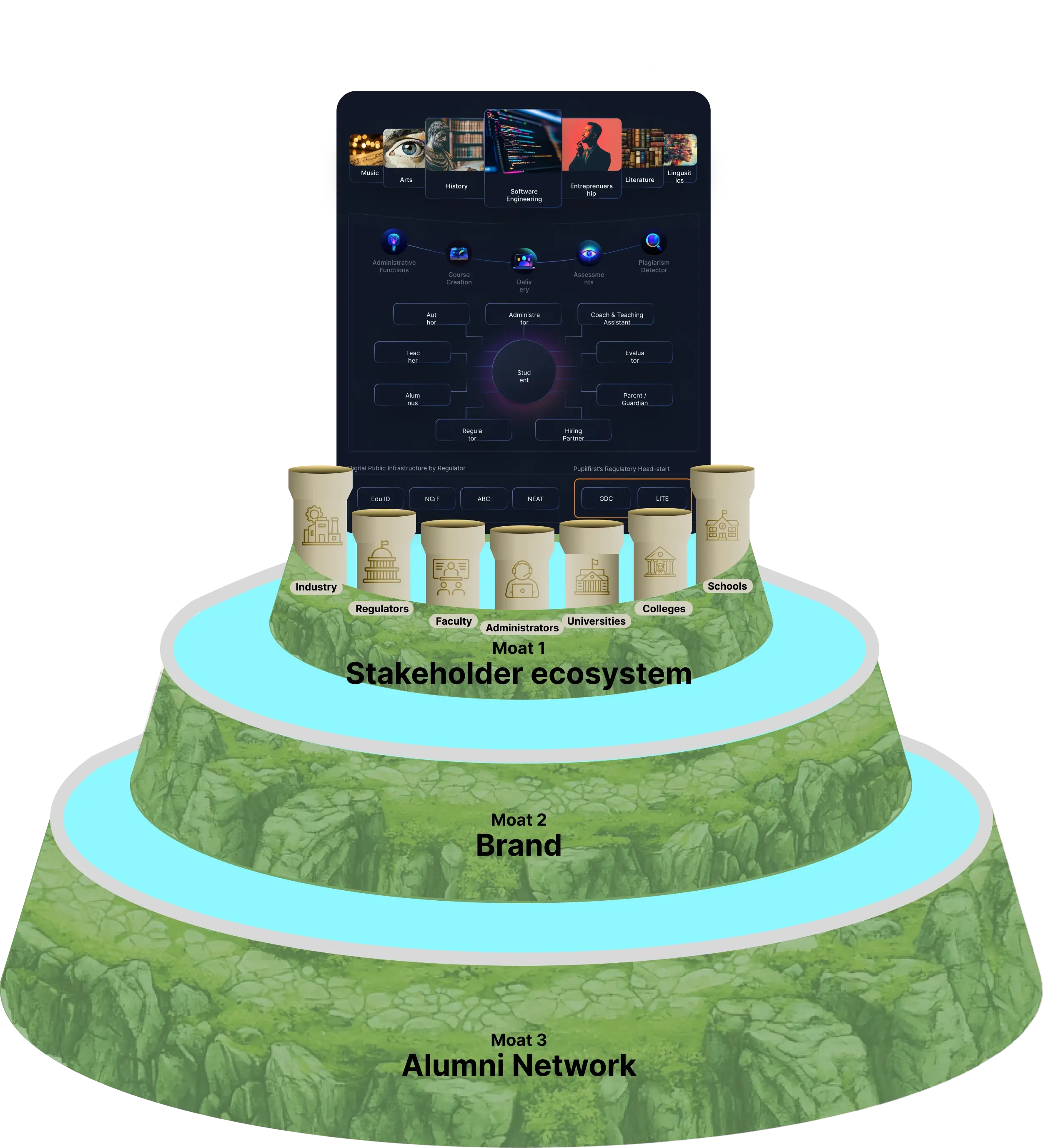
In an AI-powered technological landscape, foundational model capabilities will become ubiquitous across all companies. However, Pupilfirst holds a distinct advantage that sets us apart. We have secured crucial regulatory approvals, giving us a two to three-year head start in the market.
Using this head start, once we build our brand to be synonymous with high-quality education, and by nurturing our alumni network as a testament of success, both become unique assets that are difficult to replicate.
By choosing to develop the whole ecosystem, training faculty and administrators in using our tools, we can foster a strong sense of loyalty and integration within the educational system. This creates a network of stakeholders, including regulators, who are deeply embedded in our ecosystem.
In essence, while the system struggles with maintaining quality, Pupilfirst brings exactly that to the table - unmatched quality at scale, solidified by our brand, alumni, and ecosystem-driven approach ensuring long-term stickiness.
What AI Tools
do you intend to build?
We envision a suite of creative technological tools that leverage AI to ensure that students can learn from these courses effectively.
This tooling should help students overcome language barriers. It should help them avoid cheating themselves out of true learning. It should motivate them to put in consistent work on their courses and push them over the finishing line. These tools should also be accessible to every stakeholder involved in making it possible for students to achieve learning excellence.
Towards this end, we‘ve reimagined our existing educational tooling and processes, placing AI as the lynchpin, connecting every stakeholder to the student. Read more.
In essence, while the system struggles with maintaining quality, Pupilfirst brings exactly that to the table - unmatched quality at scale, solidified by our brand, alumni, and ecosystem-driven approach ensuring long-term stickiness.
What are the
key DPI and Policy tools
being put in place by the Government?
In 2020, a forward-looking New Education Policy (NEP) was formulated to transform the system. Since then, learning from the success of India Stack, new policy tools are being steadily introduced:
2020
The Ministry of Education approved NEAT, a new public-private partnership initiative where for-profit private sector companies can sell courses in this regulated market in exchange for a guaranteed number of free seats for underprivileged students.
2021
An Academic Bank of Credits (ABC) facility was created for students to accumulate academic credits required for a degree from multiple sources.
2023
A New Credit Framework (NCrF) was ratified, enabling students to learn via traditional classrooms, taking skill courses from training providers or by learning directly from industry via internships, all providing credit that counts towards their degree.
2024
A Unique Education ID for all students, like UPI ID, has been launched as the final piece of this puzzle.
Similar to NPCI for UPI, the National Education Technology Forum (NETF) has been set up to maintain the architecture and to ensure interoperability within the above digital infrastructure.
What regulatory support
do you have to scale
beyond the 100,000 students?
AICTE has approved the Leadership In Teaching Excellence (LITE) meant to train 24 million students, and 100,000 faculty members in emerging technology skills.
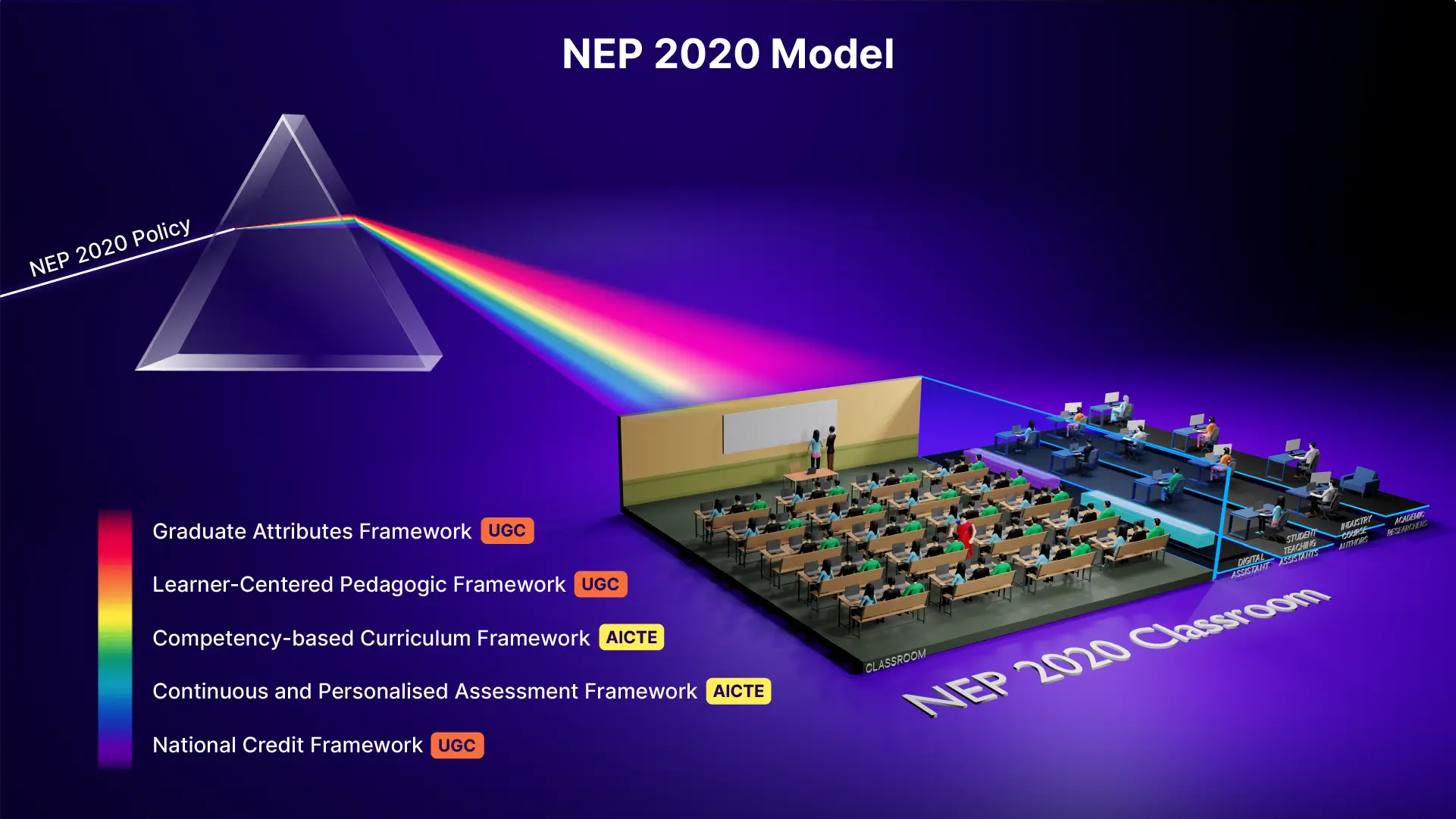
Pupilfirst has incorporated regulatory frameworks necessary to meet the requirements to operate within the formal system.
While 704 number of colleges expressed interest in launching our courses, only 19 were able to navigate the hurdles of their parent university‘s approval processes. This has been the greatest roadblock in reaching greater numbers of students.
To remove this roadblock, we‘re deeply integrating with one university, TDU, and leveraging the policy tools released recently to make this possible.
How can Pupilfirst access
the DPI for Education?
India‘s formal education system is precisely where the payment system was before the introduction of UPI in 2014.

Similar to how PhonePe accesses the UPI payment system via Axis Bank for financial credit transfer to any bank account, Pupilfirst has now integrated with TransDisciplinary University enabling us to onboard any student, and issue academic credits into their Academic Bank of Credits (ABC) account.
How many curriculums
have you built so far?
We have built two curriculums which have been approved by the regulator as the national model curriculums.

Pupilfirst is authorised under the NEAT initiative of Ministry of Education, Government of India to sell our courses to students under a cross subsidy model.
Have you tested
these anywhere?
15 universities have approved these curriculums, 126 faculty members have been trained, we have trialled the process with over 10,000 students, and have 800 alumni working across global technology companies.
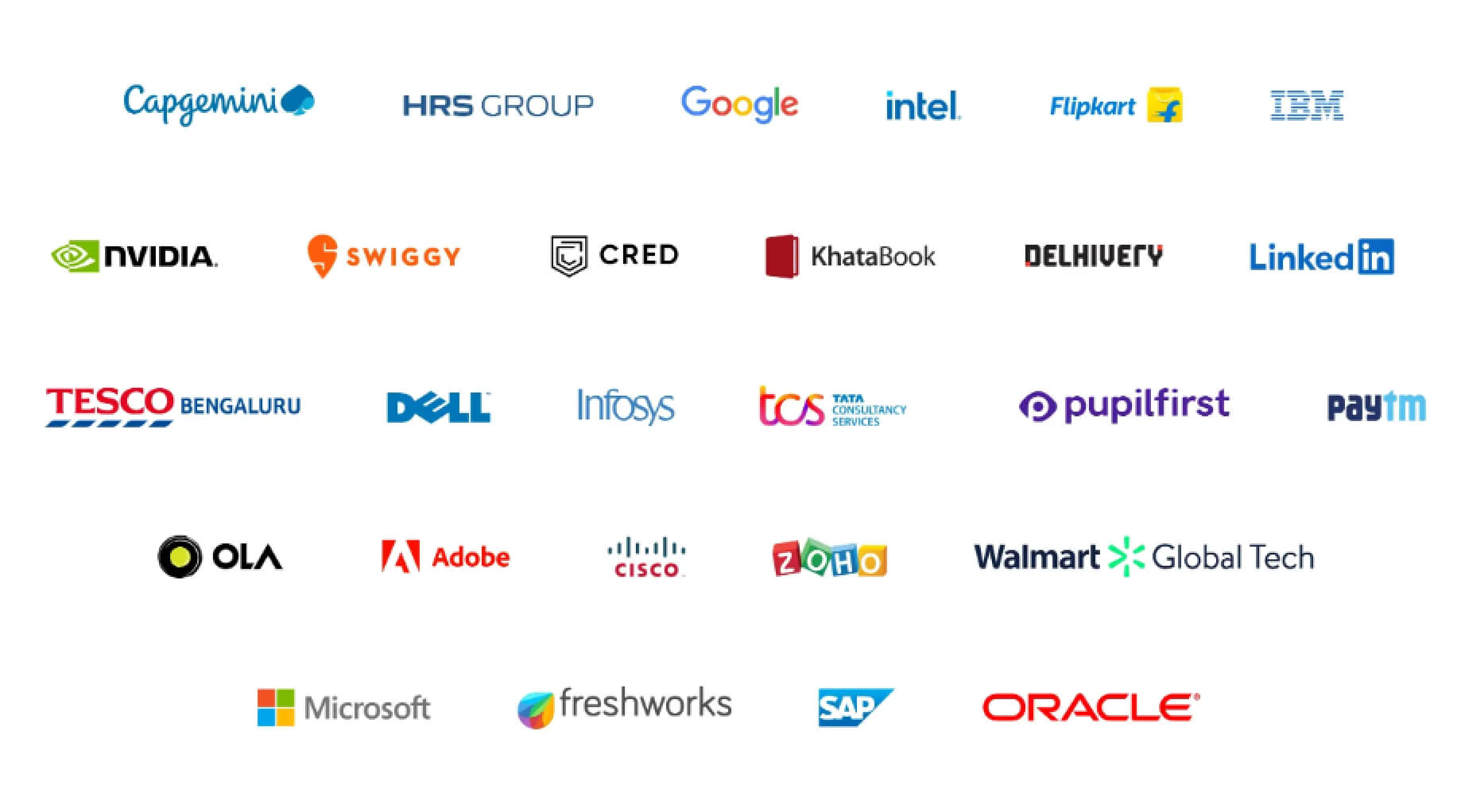
Our Alumni are working across world‘s leading technology companies and startups.